Tax Compliance
Provisional Tax, Done On Time
If you earn income that doesn’t have PAYE deducted, such as freelance, business, rental or foreign income, you probably need to pay provisional tax. We calculate it, file your IRP6 returns and keep you clear of penalties.
Updated 5 October 2026.
Who has to pay provisional tax?
Generally, anyone who earns income that isn’t taxed through PAYE, for example:
- freelancers, consultants and sole proprietors;
- people earning rental income;
- content creators and people paid by foreign clients or platforms;
- salaried employees with significant side income.
There are exceptions. For example, you are not a provisional taxpayer if you don’t run a business and your only extra income is interest, foreign dividends or rent totalling R30,000 or less for the year.
When are the payments due?
For a tax year ending in February:
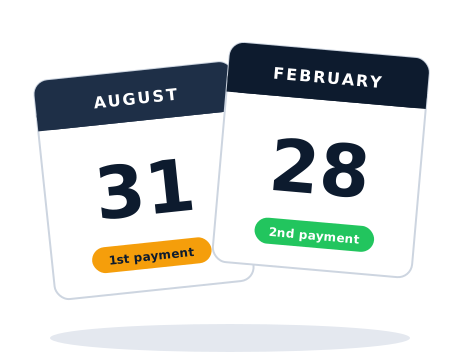
- First payment: by 31 August, based on an estimate of your income for the year.
- Second payment: by the last day of February, based on a more accurate estimate.
- Optional third payment: by 30 September after the year ends, to top up and reduce interest.
Your annual tax return is due later, in January of the following year. For the 2026 tax year, that deadline is 22 January 2027.
What are the penalties?
- Late payment: a 10% penalty on the amount paid late, plus interest.
- Underestimation: if your second estimate turns out too low, SARS can charge a penalty of up to 20% of the shortfall. If your taxable income is R1 million or less, your estimate should be at least 90% of your actual taxable income (or not below the basic amount). Above R1 million, it should be at least 80%.
How we help
- Register you as a provisional taxpayer if needed.
- Work out realistic estimates from your actual records.
- Submit your IRP6 returns and remind you before each due date.
- File your annual return and reconcile what you paid against what you owe.
Common questions
When are provisional tax payments due?
For a February year-end, the first payment is due by 31 August and the second by the last day of February. An optional third payment can be made by 30 September after year-end.
Am I a provisional taxpayer if I have a salary and a side income?
Usually yes, if the side income isn’t taxed through PAYE. The main exception is when your only extra income is interest, foreign dividends or rent of R30,000 or less a year and you don’t run a business.
What happens if I underestimate my income?
If your second estimate is too low, SARS can charge an underestimation penalty of up to 20% of the shortfall. A careful estimate based on real figures avoids this.
Not sure if you’re a provisional taxpayer?
Tell us how you earn your income and we’ll tell you whether provisional tax applies and what you should be paying.